
International Container Terminal Services Inc. (ICTSI) has officially launched the South Luzon Container Terminal (SLCT) project, as construction of the Philippines’ second largest terminal goes into full swing.
The US$800 million terminal, located about 110 km south of Manila within the Bauan International Port in Batangas, will expand trade facilitation capabilities not only in southern Luzon but across the entire country. It will support industrial and manufacturing activities, including cargo requirements associated with energy-related and industrial projects in the region. The terminal will also complement Manila’s trade facilitation capabilities.
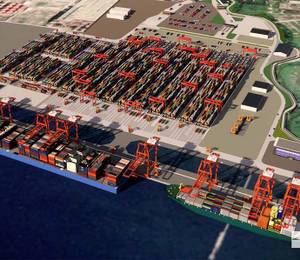
SLCT occupies a naturally protected cove on Batangas Bay, which is expected to provide operational stability as the development advances towards its target 2028 completion and prepares for ultra‑large container vessel capability.
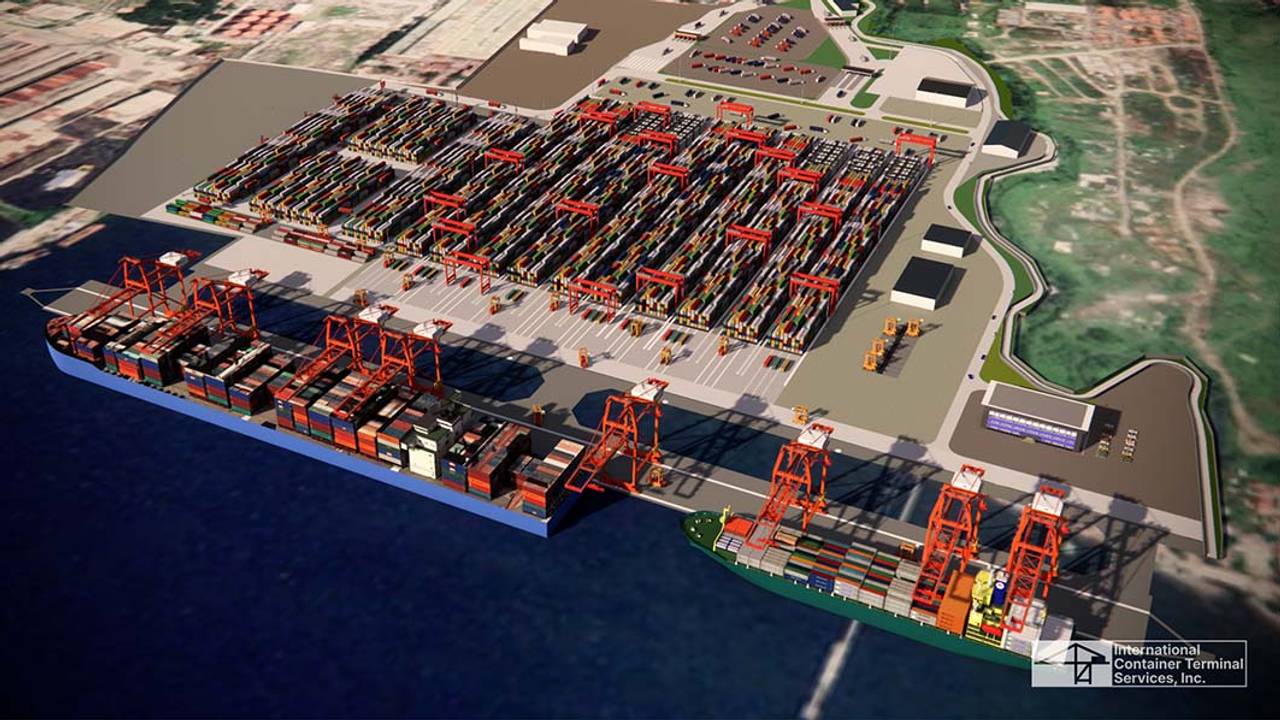
At full development, SLCT will have an 800‑m quay, 38 ha of yard and an 18‑m berth depth, as well as a terminal capacity that will exceed two million TEUs annually. This project aligns with Philippine President Ferdinand R. Marcos Jr.’s ‘Build Better More’ infrastructure programme.
Phase 1 consists of marine works and construction of a 425‑m quay designed for super post‑Panamax operations. Construction work started in September 2025 and is scheduled for completion in September 2027, with equipment delivery and installation targeted for August 2027. Upon reaching operational readiness, SLCT is expected to contribute additional throughput capacity within ICTSI’s Philippine portfolio and support long‑term network planning.
Envisioned as a smart technology terminal, the facility features a suite of advanced equipment, including eight remote-controlled ship-to-shore cranes, 20 rail-mounted gantries, and 32 diesel-hybrid carriers and handlers.
Accessibility to SLCT is directly through the Bauan-San Pascual-Batangas-STAR route and major South Luzon tollways with additional transport connectivity under consideration for the Cavite‑to‑Bauan corridor.
All images: ICTSI